By: Tom Swanson, Senior Engagement Manager, Heinz Marketing
One of the biggest challenges to properly orchestrating ai agents for marketing is making them accessible to the team. Accessible in this sense means three things:
- The agents are all in one place
- It is easy to understand how/when to use them
- They are not onerous or fidgety to use
Adoption depends on accessibility and accountability. I have plenty of articles on accountability so let’s talk about the other one.
First things first, there is so much martech. Everyone has heard all the AI claims and all the martech start to sound the same. But the results are still lagging. Part of this is that AI agents just aren’t accessible in isolated tools.
At Heinz Marketing, we are thinking through how agents can be custom-built and then integrated through a shared front-end to improve adoption and speed along change management. 
The idea with this is to make easy workflows with agents that can talk to each other. These have a variety of functions from CRM data analysis to campaign planning. The important point is that the agents can work together and build from each other.
As it stands there are still manual inputs that we have to make, and data sanitization is time consuming, but there is a strong argument to be made for this sort of model from a user accessibility standpoint.
Setup
This approach requires more setup than others as you have to both build the agents and then the platform to support them. However, it is worth it in my opinion. The benefits of faster adoption, better feedback, and clear usage outweigh the up-front setup and ongoing maintenance costs.
Here is roughly how it works, if you are looking to understand it a bit better. If you really want to understand it, there are plenty of resources out there to help you.
Agents themselves can mostly be built on third party platforms such as n8n or agent.ai. This is where you have the actual function of calling together steps and most tool integrations. A lot of these platforms are low- or no-code, but don’t worry, we will get into coding.
Next is a front-end to pull those agents in. There are a few platforms like Cloudflare or Netlify that make this pretty easy and have flexible packages. These are generally best for static applications, which is how we set up our agent front-ends. These tools pull agents in via webhooks, which can be generated in the agent tools. Make sure the tool you select offers that capability.
Finally, you will want a database that the front end can access to grab outputs from some agents and use them as inputs for others. This is can be organized in a variety of ways to ensure that agents can access past work regardless of how far back it goes. There are a number of options here like Supabase.
The front end now functions essentially as an app that can be accessed through a browser. If you can program this, or have a team that can, great. If not, this can be outsourced relatively easily to qualified freelancers.
Accessibility
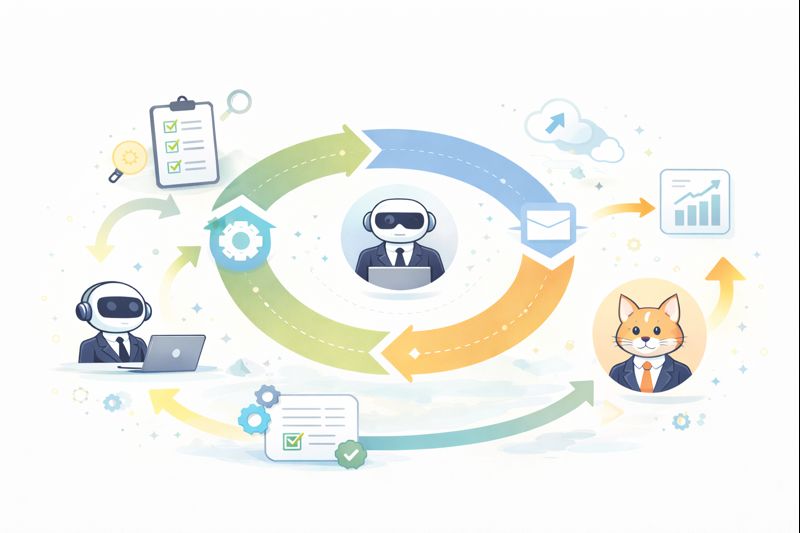
Simply by making the front-end, the agents are all brought together in one place (theoretically). This solves the first requirement of being accessible.
Knowing how and when to use the agents is a matter of training, documentation, and experience. If folks are held to using the agents, they will get the experience. Effective training takes some time and a few practice runs, but is definitely doable and worthwhile. Finally, the front end should be developed to help your folks use it. Clear and consistent naming, organization by function, and some on-screen prompts will all help.
Finally, it can’t be onerous to use. This is the one where things get screwed up most often. Teams often build agents ad-hoc, without a lot of thought as to where they fit. They have a hodgepodge of available agents, all in different systems, and that sours the team not on the tools but on the concept of integrating AI at all.
If you don’t spend the time to think through where agents fit into your org chart and how they are arranged, then this can get out of hand. Here is a helpful post from my colleague Payal: How AI Agents Fit Into a Marketing Org Structure.
The other area where this gets screwed up is in workflow. Often times, there is human oversight needed at key points in the workflow. Doing too much with AI can miss these checkpoints. Additionally, doing too little with AI is tedious and defeats the purpose.
They key is to build a logical workflow first with clear hand-offs between stakeholders (be they human or machine). This should also include what data/outputs look like at each step. In our experience, most steps become small agents unto themselves, so knowing what outputs need to be is important. Here is a video on how to get started with that.
With a logical workflow, and clear agent roles, tedium in usage is avoided.
Considerations
When you are developing an agent front-end, there are a number of things to consider.’
- Whatever you build should be done with support from IT. Their role is to keep the company safe and more advanced agents will use more proprietary data. The best results from AI come from using your most valuable resource, but the price there is security protocols.
- Total cost of ownership (TCO). This is a more expensive way of doing things. Owning a front end requires updates when agents are changed, added, or deprecated. This means the company will have to spend money on somebody doing it. Personally I think the ROI is there, but I can’t prove it yet.
- Tech stack. It is possible that this might not be the right way for you. The thing to look at is if the tech stack you have can be accessed by the agent platform you use. It is possible a tool might offer webhooks of its own, in which case you could find other ways to integrate into a front end.
Conclusion
It is easy to get caught up in the AI nonsense. I have no doubt that many of the promises of AI will come true. How fast that happens is a matter of smarter implementation and the feedback that comes with genuine adoption. If you want to talk about how to make this happen, as always you can reach out to us at acceleration@heinzmarketing.com.
The post Improving Agent Adoption With A Front End appeared first on Heinz Marketing.